Diversity of copepod thermal limits
Copepods are a highly diverse group, found in essentially every aquatic habitat across the planet. This combination of diversity and wide distributions provides an exciting opportunity to examine how a variety of factors affect evolutionary adaptation. For example, copepod thermal limits generally vary across latitude, reflecting adaptation to well-known, large scale thermal gradients. However, some interesting differences are observed between habitats (e.g. - between marine, freshwater, and intertidal copepods). These habitat patterns are strongly confounded by taxonomic patterns, however, which needs to be addressed by measuring thermal limits for a broader range of copepod species from these different habitats. These patterns are described in this paper.

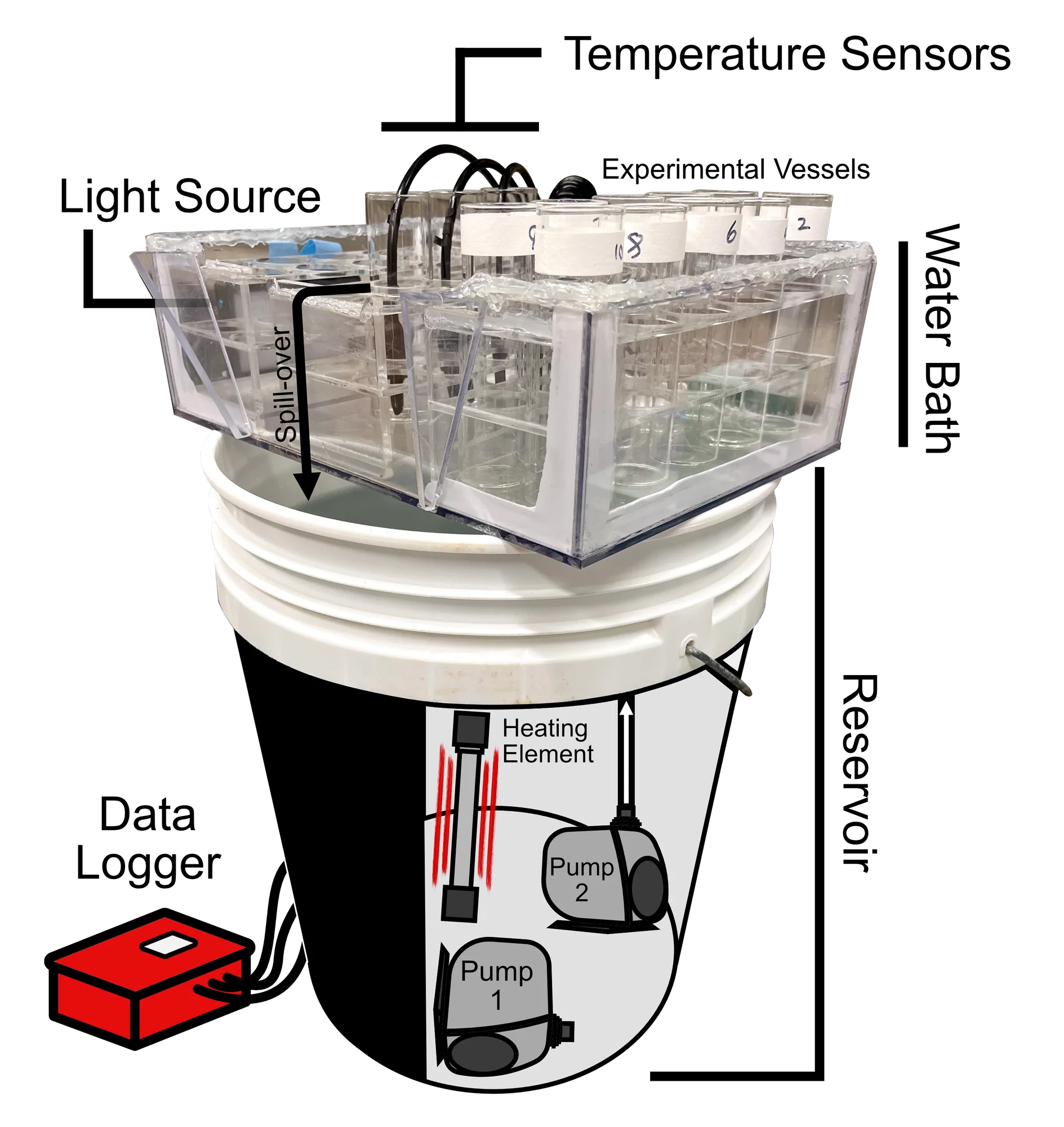
One obstacle to this is the availability of equipment and methods to measure thermal limits. To address this, we assembled a highly portable, cost-efficient device for measuring the critical thermal maxima of copepods and other small organisms (described in this paper). This device has made it easier to examine latitudinal, habitat-specific, and taxonomic patterns in copepod thermal limits. One interesting example of the utility of this new device is some work we did on a trip out to the shelf break aboard the RV Connecticut. Being able to examine thermal limits while still at sea overcomes some of the major logistical constraints of working with these copepods (which generally don’t like being brought back to the lab). The initial data suggests that off-shore species generally have lower thermal limits than near-shore species, and that species that undergo diel vertical migration (DVM) may have particularly low thermal limits. Given the important role open ocean copepods play in global biogeochemical cycles, these patterns are important to dig into.


We’ve also been able to use this device to start testing the effects of other factors on copepod thermal limits. These ecological influences on thermal limits are an important consideration for predictions about the response of marine communities to climate change. For example, we’ve shown that thermal limits are reduced after only a couple days of starvation. As climate change is predicted to affect multiple environmental factors (including the quantity, quality, and distribution of food sources), these interactions are important for our understanding of population vulnerabilities.
